
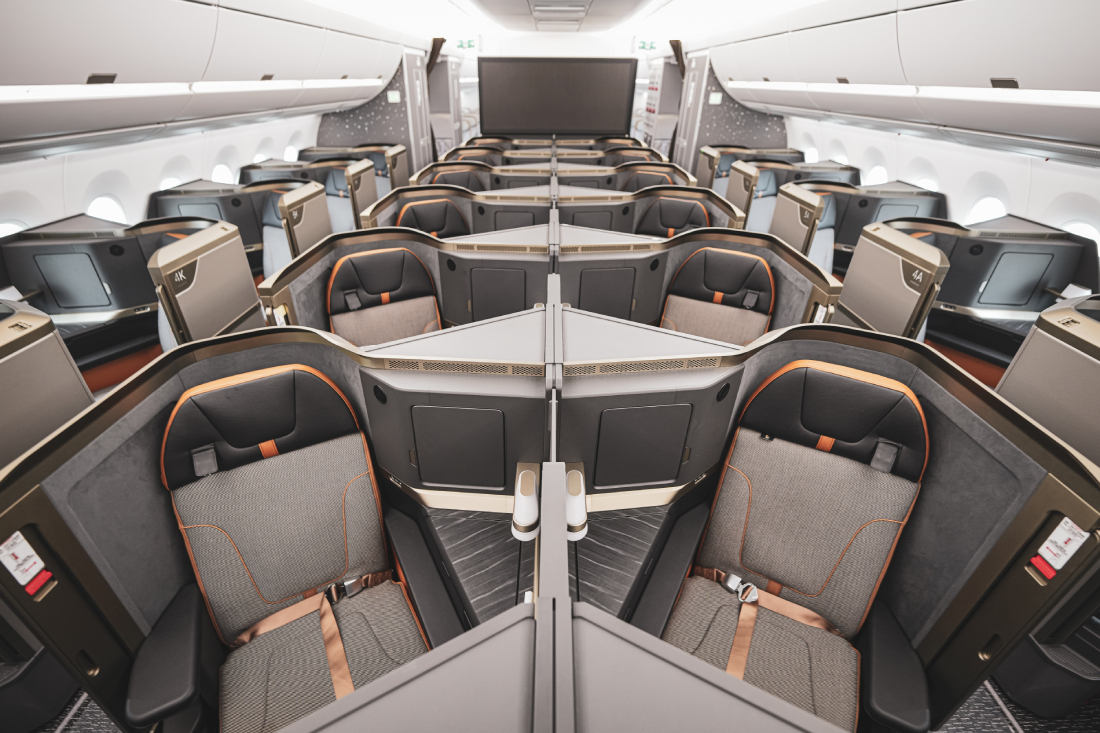
Phoenix to Asia with points is finally a real option, and the people who should care most live up and down the West Coast. For years, reaching Asia on miles from the western US meant funneling everyone through Los Angeles, San Francisco, or Seattle. Starlux changed that in January 2026 when it launched Arizona’s first-ever nonstop to Asia, opening a fresh western gateway into Taipei and onward across the continent. The route is definitely useful, but the points side has a twist: there is exactly one practical way to book it and the pricing swings hard.
Here is how it actually works.
Arizona’s First Nonstop to Asia Runs Through One Program
Starlux flight JX25 lifts off from Phoenix at 11:25 pm and touches down in Taipei two calendar days later at 4:55 am, about 14.5 hours in the air aboard an Airbus A350-900. The route launched on January 15, 2026, opened at three flights a week on Sundays, Tuesdays, and Thursdays, and picked up a fourth on Saturdays in mid-March.
The catch arrives the moment you try to book it with points. Starlux belongs to no alliance. It has flirted with joining oneworld and runs a commercial tie-up with American Airlines for connections, which fools plenty of people into thinking AAdvantage or another oneworld program will get them there. It will not, at least not at any rate worth spending. The only loyalty currency that books Starlux at a reasonable price is Alaska’s Atmos Rewards, the program you used to know as Mileage Plan. The flight covers roughly 7,401 miles, which slots into the Atmos 7,001 to 10,000 mile band, and at the saver level that means 85,000 points one-way in business and 55,000 in premium economy. Those two numbers are the whole game.
Getting Points Into Atmos Is the Hard Part
Atmos is generous to redeem with and stingy about how you fund it. You cannot transfer in from Chase Ultimate Rewards, Amex Membership Rewards, or Citi ThankYou, which rules out the balances most points travelers are sitting on. The two doors that do open are Bilt Rewards, which moves over 1:1, and Marriott Bonvoy, which transfers at 3:1 with a 5,000-point bonus for every 60,000 you send. The Marriott conversion rate looks horrible on paper, and in most cases it is, but make sure to do the math for your specific instance if you’re sitting on a big pile of Marriott points. What I would never recommend here is transferring flexible points from your credit card to Marriott, only to then transfer them at the 3:1 ratio to Alaska.
What It Actually Costs, and Why the Big Number Is a Trap
Now the part that separates a smart booking from a waste of points. Most fixed dates in business are pricing around 250,000 points one-way, and that is simply the dynamic, non-saver bucket doing what it does. Paying it means handing over roughly triple the saver rate for the identical seat, so treat that figure as the price of impatience rather than a real fare. The 85,000-point business saver is out there, but for now it surfaces last-minute on a rolling basis and nearly always as a single seat. Premium economy is where the schedule opens up: 55,000 points one-way through a wide range dates, though typically only about two seats per flight.


It helps to understand why the picture looks like this. Alaska has a habit of pricing brand-new routes aggressively right out of the gate. When LAX to Taipei debuted in 2023, the introductory 60,000-point business saver survived barely 24 hours before Alaska pushed it to 165,000 once the cheap inventory cleared. The takeaway is not that fares always fall, it is that early award space on a new Starlux route is thin and prone to sudden moves. The reason to expect today’s 250,000-point rate to soften is mechanical rather than hopeful: as Starlux settles into its fourth weekly frequency and the route ages past launch, saver inventory tends to loosen. That is a reasonable bet, not a guarantee, which is exactly why locking a 55,000-point premium economy seat now beats gambling on a business windfall later.
Premium Economy Is the Real Story
For almost everyone booking this route on points, premium economy is the answer, and it is not a consolation prize. Fifty-five thousand points for a 14-plus-hour crossing on Starlux, a carrier that treats its premium cabins as the entire brand, is a genuinely strong rate. Set it against 250,000 points for dynamic business on the same departure and the comparison stops being close. The dates are wide open, and for travelers in Arizona, California, and the broader Mountain West it erases the old tax of positioning to LAX, SFO, or Seattle just to begin a trip to Asia. Economy is the one cabin to ignore here. Cash fares on the route have turned up in the $700s round-trip, so spending points to sit in the back makes no sense.

How to Land Business Without Paying 250,000 Points
If you want the front cabin without the dynamic-pricing mugging, there is a clean workaround built on a single fact: Atmos charges nothing to cancel an award and redeposits your points the moment you do, as long as you cancel before departure. The only money at risk is the $12.50 partner booking fee per direction. So you book the 55,000-point premium economy seat today to lock in your travel, then keep watch for an 85,000-point business saver. When one appears, you book it as a separate award and cancel the premium economy ticket for a full refund of points. It is not an upgrade in the airline sense, it is a swap that leaves you in a better seat with your original points back in your account.
Seats.aero is the efficient way to monitor that rolling saver space instead of hammering refresh on Alaska’s site. One thing to keep in mind: Because business releases a single seat at a time, the swap works for one person per flight, so a couple can send one traveler up front while the other rides premium economy.
Who Should Skip It
None of this makes the route right for everyone today. If you need three or more seats in the same cabin on the same flight, the two-seat and one-seat releases will frustrate you, and you are better off waiting for the schedule to deepen. If you are eyeing the 250,000-point business fare with a fixed date and no flexibility, the math there is not very compelling. If your points live entirely in Chase, Amex, or Citi with no Bilt or Marriott to feed Atmos, you do not have a realistic path in yet. And if chasing saver space that may never line up with your dates sounds exhausting, skip the business hunt and book premium economy outright.
The Bottom Line
Phoenix finally has a nonstop to Asia, and once you strip away the noise the points math is refreshingly clear. Premium economy at 55,000 points is the deal worth acting on now. Business at 85,000 is worth stalking if you are patient and flexible. Business at 250,000 is a trap. For West Coast and Mountain West flyers in particular, this route just became one of the better ways to reach Taipei and beyond, and it asks for far fewer points than the scary top-line number suggests.
Best Offers

-

Chase Sapphire Preferred® Card
Welcome Offer 75,000 bonus points
- Transferable points
- $100 hotel credit
Annual fee $95 Learn More -

Atmos™ Rewards Ascent Visa Signature® Credit Card
Limited-time online offer – 50,000 bonus points plus a $99 Companion Fare
-

Capital One Venture Rewards Credit Card
Welcome Offer Earn 75,000 miles
- 2x on everything
- 15+ transfer partners
Annual fee $95 Learn More -

Chase Sapphire Reserve®
Welcome Offer 100,000 bonus points
- Lounge access
- $300 travel credit
Annual fee $795 Learn More
Welcome offers are subject to change. Valid as of October 11, 2026. Terms apply. See footer for advertiser disclosure.


Leave a Reply